
Sea lions are in the same family as seals, but they aren’t a true seal species. They have characteristic external ear flaps that differentiate them from other seals. They live in a range of habitats, even the Antarctic! There are six different sea lion species.
These animals spend a lot of their time in the water, diving and feeding. However, they are also able to move on land by lifting their bodies up and using their back flippers as make-shift feet. Sea lions hang out on rocks, sandy shores, and marinas in large colonies when they aren’t in the water.
Taking a closer look at a sea lion’s diet…
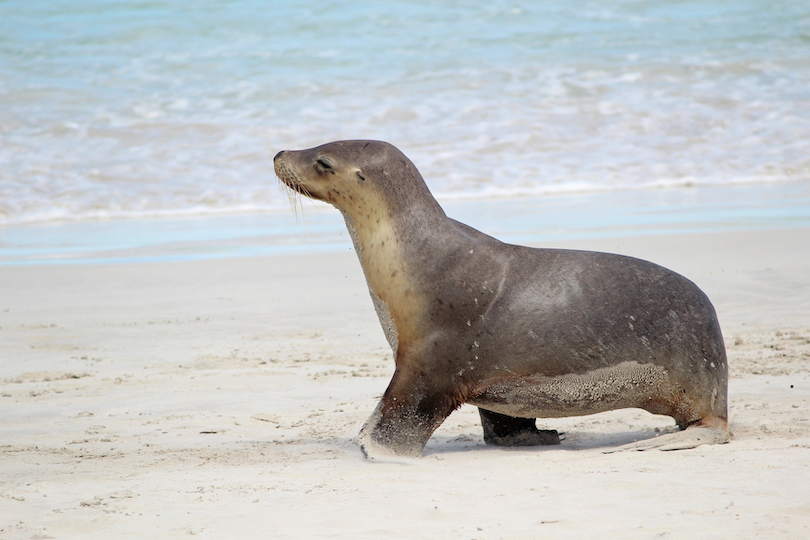 © Dreamstime
Sea lions are marine mammals that hunt in the sea, but rest and breed on land. They are carnivores, more specifically piscivores as their diet mainly consists of fish. All their food is caught in the sea, they don’t hunt or feed on land. They are opportunistic predators that feed on a large variety of fish and cephalopod species.
What they eat on a hunt varies across species and habitat, though all six sea lion species are piscivores and there are large crossovers in feeding preferences. Commonly predated fish species include herring, salmon, hake, anchovies, opaleye fish, and sardines. They also hunt cephalopod species like squid and octopi.
Sea lions have been found with stones in their stomachs, one individual had 60 pounds worth! It is thought they might eat stones to increase their weight and help them dive, to aid digestion, or to alleviate irritation caused by parasites; but there’s little certainty why they swallow stones.
How much does a sea lion eat?
The amount a sea lion eats changes considerably across species as there are large differences in size and weight. The smallest sea lion species is the Galapagos sea lion that weighs an average of 180 pounds. Meanwhile, a male Steller sea lion can weigh up to 2,500 pounds, although females weigh some 800 pounds.
Sea World estimates that sea lions eat between 5-8% of their body weight per day. This amounts to somewhere between 9-200 pounds, with large variation across species.
These marine mammals need to eat a lot to build up and maintain their blubber. This fatty layer, common across marine mammals, acts as an insulator and maintains their temperature constant in cold waters. Without it they wouldn’t be able to hunt at sea for long and would likely starve.
What do sea lion pups eat?
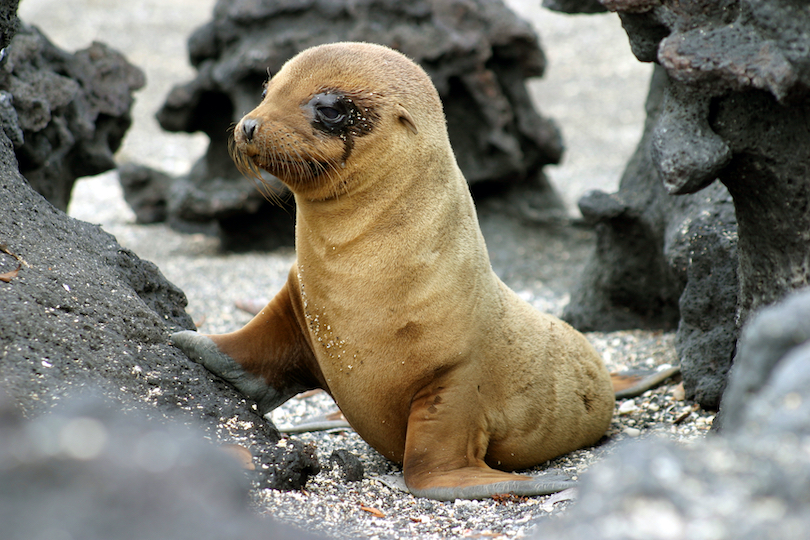 © Dreamstime
Sea lions are mammals that nurse their young with a nutrient dense milk produced in mammary glands that are responsible for lactation. Pups suckle the milk through the mothers’ teats, making calling sounds to alert their mother when they are hungry.
They birth their young on land and stay with them for a few days. After a few days they start leaving the pup on land whilst they go to sea to forage for food. As the pup gets older it is left for extended periods of time. Once they are a few weeks old, pups accompany their mothers to hunt.
Mothers nurse their pups for six to 12 moths, though Galapagos pups have been observed nursing for three years! After two months they begin to supplement their diet with fish, learning to hunt by mimicking their mother’s behavior on foraging trips.

What do captive and orphaned sea lion pups eat?
Captive sea lion pups suckle as they would in the wild. A mother sea lion’s milk contains 32% fat, about 9% protein, and 0.6% lactose (sugar) for the first two months. The fat content increases gradually, and by the fourth month of nursing, the fat content is around 44%.
It is not usual for a mother sea lion to nurse a pup that isn’t her own. Other pinniped families do raise and nurse orphaned calves, but this behavior is rare in sea lion species. Unfortunately, orphaned sea lions have little chance at survival due to starvation.
When do sea lions eat?
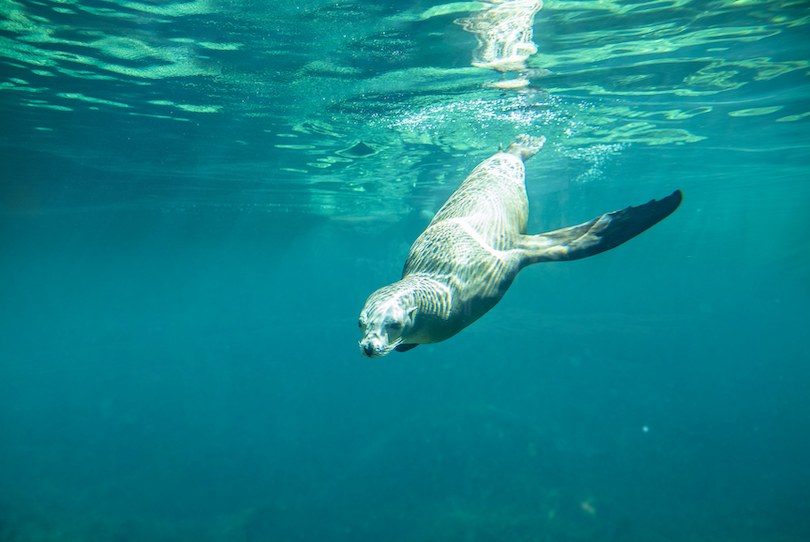 © Dreamstime
The feeding habits of each sea lion species are diverse. Sea lions can’t be generalized as nocturnal (active at night and asleep during the day) or diurnal (active during the day and asleep at night) as their activity is species dependent.
The smallest sea lion species, the Galapagos sea lion, hunts its prey during the daytime. They can spend up to 17 hours at sea on a fishing trip, diving anywhere between 85 and 198 times to locate and catch prey.
On the other hand, the largest of all the sea lion species, the Steller sea lion, is nocturnal. They hunt at night and spend the daytime resting by the shore in small gatherings.
Where do sea lions forage?
 © Dreamstime
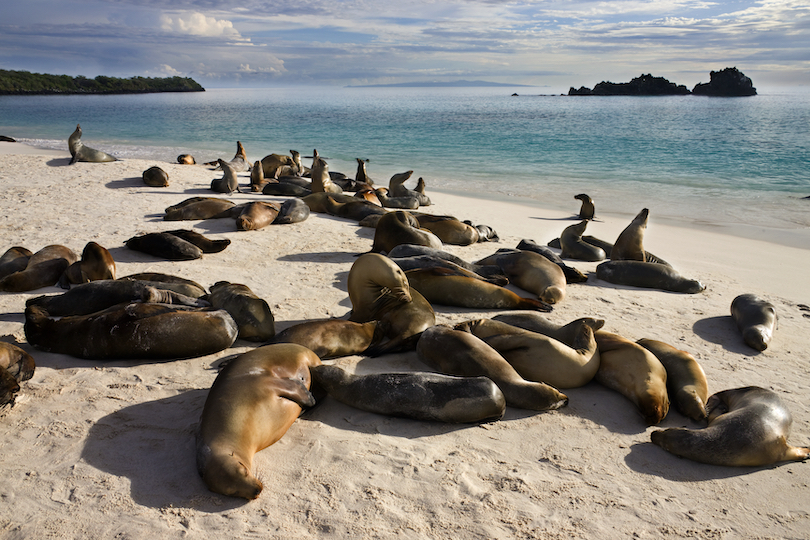
Sea lions tend to hunt close to land. They catch their prey by diving down to the ocean floor in shallow waters just offshore. The distances that sea lions reach whilst foraging varies across species. Some sea lion species are migratory and cover long distance throughout the year to feed.
Steller sea lions forage in shelf region within 19 miles of the shore, although they can be found over 62 miles from land at depths of 6,600 feet. Meanwhile, Californian sea lion females forage between 6.2–62.1 miles offshore and males may hunt as far as 280 miles from land when water temperatures rise.
What features do sea lions have that help them feed?
Sea lions have a series of features that they have evolved to help them locate, catch, and kill their prey. These mammals dive for their prey. They have strong lungs that allow them to hold their breath for eight to 20 minutes at a time so they can dive down and look for food.
They have denture characteristic of canine species; each sea lion has some 34-38 teeth. At the back of their mouth, they have flat teeth that help them crush any shelled prey, such as crabs and clams, they find on their dive before they are swallowed.
Sea lions don’t chew their food, but they use their cone-shaped teeth to hold onto prey and tear meat into small chunks they can swallow whole. These animals have long whiskers, known as vibrissae. They dive down and swim along the ground, touching their vibrissae to the seabed to quickly identify and locate prey.
What eats a sea lion?
Sea lions are in the same taxonomic group as walruses and seals, known as pinnipeds. Aquatic predators target seals and sea lions as they are high in fat content and relatively easy to catch. Walruses are much heavier than other pinnipeds and have large tusks they protect themselves with, thus they are predated on much less.
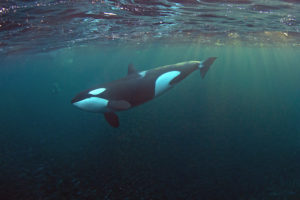
The only known predators of sea lions are sharks, killer whales, and humans. Shark species like the great white shark, hammerhead shark and blue shark have all been observed eating sea lions.
The fastest a sea lion can swim is around 25-30 miles per hour, though they usually move at 15 miles per hour in the water. Their predators swim at a very similar speed.
The best way for them to evade predation is to move onto land or ice floes. Though even here they aren’t completely safe, as orcas can create waves that knock sea lions of ice floes and will occasionally beach themselves to catch their prey.
What do sea lions eat in captivity?
 © Dreamstime
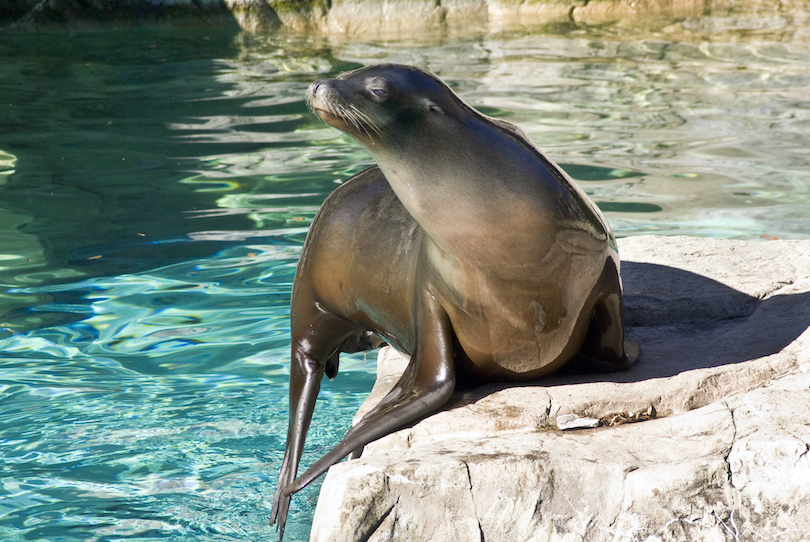
Captive mammals should be fed a diet that closely mimics their diet in the wild. Mammals held in captivity experience issues with development, fertility, and disease. Maintaining their wild diet helps combat these problems.
The Californian sea lion is the species most found in captivity. These highly intelligent mammals are renowned for performing elaborate tricks. They are fed a diet made up among entirely of fish: mainly capelin, pompano, mackerel, and herring.
Aside from fish, captive sea lions are fed squid. They are given their food sporadically throughout the day, often as a reward for performing a trick, to mimic their inconsistent feeding habits in the wild.
Most mammals held in captivity experience a decreased life expectancy, however sea lions do well in captivity. California sea lions live 15 to 20 years in the wild, whilst in captivity they live 25 to 30 years. This is likely due to the lack of predation in captivity.